What Pleasanton's Median Home Price Actually Buys in 2026
Open any portal and Pleasanton looks like one market with one number. Redfin puts the three-month median at $1.5M through May 2026. Houzeo pegs January 2026 at $1,497,500. Zillow's home value index sits near $1.59M. Pick your source and the picture is roughly the same.
That single number hides three separate markets stacked inside one ZIP code, and the friction that catches buyers off guard isn't the sticker price. It's the line item the sticker price doesn't show.
Newer developments on Pleasanton's east side and in Dublin frequently carry a Mello-Roos special tax, a Community Facilities District assessment layered on top of the standard 1% base rate that Proposition 13 established. For newer single-family homes in eastern Alameda County, annual CFD assessments commonly run $1,500 to $3,500. Older tracts built before roughly 1990 typically carry none.
Two things about that number matter for a buyer comparing addresses.
First, Mello-Roos isn't based on assessed value. It's a fixed parcel charge set when the district was formed, and it doesn't shrink if home values drop. Second, and this is the piece portal shoppers miss: your lender counts it against your debt-to-income ratio at pre-approval. A $3,000 annual CFD charge quietly reduces borrowing capacity by tens of thousands at mid-6% rates. Freddie Mac's Primary Mortgage Market Survey put the 30-year fixed average at 6.55% for the week ending July 16, 2026.
Two homes at the same $1.5M list price, one in 1970s-era Birdland and one in a newer east-side subdivision, can present very different monthly obligations and very different lending outcomes. The median doesn't tell you which one you're looking at.
Under the citywide number, Pleasanton splits cleanly.
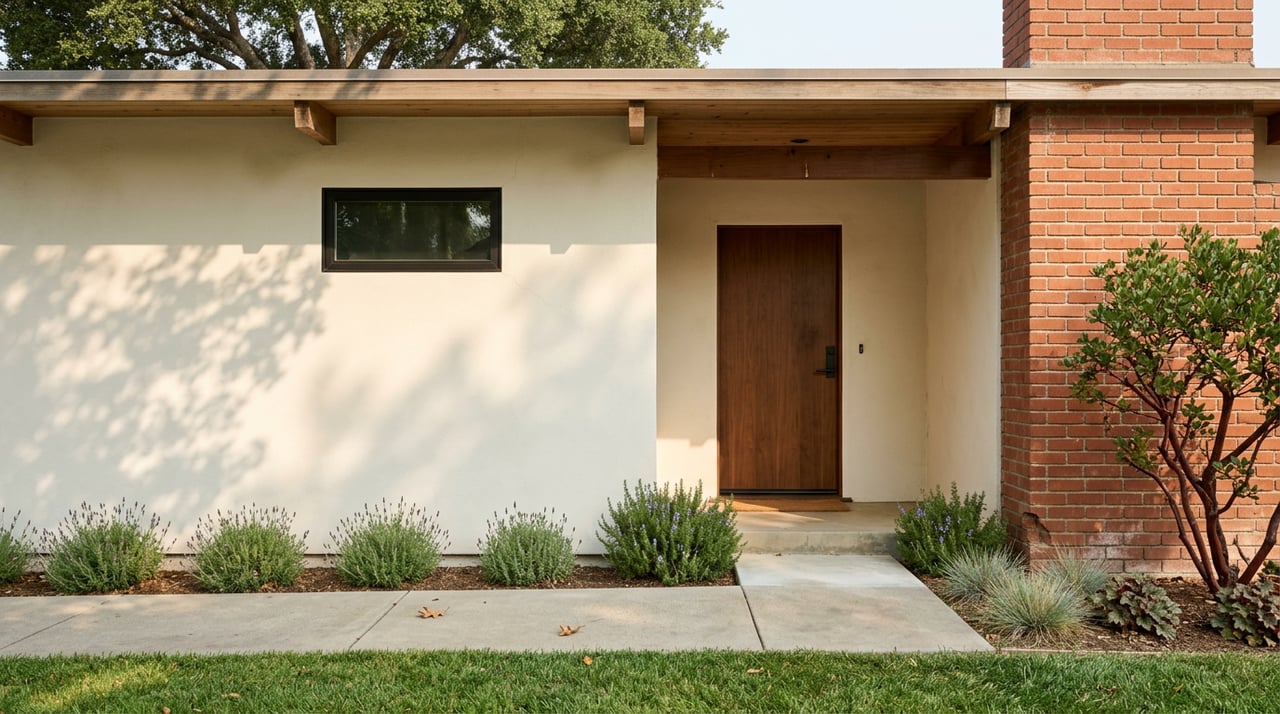
The mid-century school-zoned core covers Birdland, Val Vista, Pleasanton Valley, Pleasanton Meadows, Mohr Park, and Vintage Hills. These are Morrison Homes and HC Elliott builds from the mid-1960s through the 1970s, typically 1,500 to 2,800 square feet on 6,500 to 8,000 square foot lots, no HOA in most cases, no CFD.
The luxury gated tier is Ruby Hill and Castlewood. Ruby Hill was developed in the 1990s around a Jack Nicklaus championship course, roughly 955 homes, French Country and Mediterranean architecture, with an HOA around $295 per month at recent listings and 24/7 manned gates.
The newer master-planned tier sits primarily east and southeast, where CFD assessments are common and lot sizes and finish levels reflect 2000s and 2010s construction.
| Sub-market | Recent median | Days on market | Structural quirk |
|---|---|---|---|
| Val Vista | $1,390,000 (Feb 2026, -6.1% YoY) | Citywide avg 21 | No HOA, no CFD, 1970s stock |
| Vintage Hills | $1,695,000 (May 2026) | 37 avg | Views toward Diablo range, some pockets abutting Ruby Hill |
| Birdland | $2,074,302 (May 2026, -1.9% YoY) | 8 avg | No HOA, tightest supply, walk to Sports Park |
| Ruby Hill | $4.02M (up 27% YoY) | 14 avg | Gated, HOA, some off-MLS activity |
The gap between Val Vista's mid-$1.3Ms and Birdland's low-$2Ms is not a story about square footage. Both were built by the same builder in roughly the same decade. It's a story about which elementary school the address feeds into and how buyers price that access.
Pleasanton Unified School District's top feeder schools sit at 8 to 10 on GreatSchools ratings across Hearst, Mohr, Walnut Grove, Vintage Hills, and Lydiksen on the elementary side, and Amador Valley and Foothill at the high school level. Local employment adds a second demand floor. Hacienda Business Park anchors one of the largest mixed-use corporate footprints on the West Coast, and Workday, Kaiser Permanente's Tri-Valley presence, Safeway/Albertsons, and Veeva Systems all keep substantial in-office workforces here. Dublin/Pleasanton BART supports a reverse commute for households where one earner works in Oakland or San Francisco.
That combination is why a 1,700 square foot rancher in Birdland trades north of $2M while broadly similar 1970s stock outside Pleasanton Unified's boundaries sells for materially less. The premium isn't paying for the house. It's paying for the school assignment and the commute optionality attached to it.
The mid-July market read for Pleasanton single-family homes, prepared July 20, 2026 by a local Compass-affiliated team, showed 73 active listings and 17 pending sales. That works out to a 23% pending-to-active ratio using their definition.
Three data points inside that snapshot matter more than the headline:
37% of active listings had already received at least one price reduction. Active homes had been sitting an average of 46 days. And yet one-third of the 36 closed sales for the period sold above their final list price, with the sub-15-day closings averaging 102.4% of final list.
Read together, those numbers describe a market that has bifurcated by preparation, not by sub-market. Homes priced accurately for current conditions and shown in listing-ready shape are still drawing competitive offers in under two weeks. Homes priced against last summer's comps are sitting into a second and third price reduction. The 1.4 months of supply that Houzeo reported for January 2026 has not translated into automatic bidding wars.
That's the friction. In a market where the citywide sale-to-list ratio holds around 99%, overpricing by 5% doesn't produce a slightly slower sale. It produces a listing that shows up in the "price reduced" filter, which is where 37% of the current inventory already lives.
Consider a buyer with $2M in purchasing power looking at two Pleasanton listings priced identically at $1.75M.
None of that shows up in the median. It shows up in escrow.
The luxury tier operates on a different clock. Ruby Hill's 14-day average days on market and 27% year-over-year price gain look nothing like citywide numbers. Part of that reflects a genuinely different buyer pool. Part reflects that a portion of high-end Tri-Valley activity moves as office exclusives outside the public MLS, which means comps at the $3M-plus tier are thinner than portal shoppers realize. Buyers at that price point who rely only on portal data are working from a partial picture. So are sellers pricing their homes against it.
Is Pleasanton a seller's market or a buyer's market right now? Neither label fits cleanly. Inventory was 1.4 months of supply in January 2026 per Houzeo, which is textbook seller territory. But 37% of active listings as of July 20 had a price reduction and average time on market for actives had stretched to 46 days. It's a selective market. Well-prepared, accurately priced homes are still selling above list. Everything else is negotiating.
How do I find out if a specific Pleasanton address has Mello-Roos? The Alameda County Assessor and Treasurer-Tax Collector's office publishes the parcel's full tax bill, including any CFD line items separately labeled. Prior years' tax bills often accompany the seller's disclosure package. Any special assessment shows as a line item distinct from base 1% property tax.
Do the mid-1960s Birdland and Val Vista homes qualify for the same school assignments? Assignments are set by the district, not by neighborhood name, and boundaries can be adjusted. Confirm the current assignment for a specific address on Pleasanton Unified's boundary lookup before writing an offer that assumes a particular school.
The median in Pleasanton is a starting point, not a conclusion. What it actually buys depends on which decade the tract was built, which school the address feeds, and which line items ride along on the tax bill. If you're weighing an offer or preparing a listing and want a read on which sub-market your specific address sits in, Serean Kimmel can walk you through the comps, the tax profile, and the pricing strategy that fits the current data. Get Your Free Home Valuation to start with your own address.
Get assistance in determining current property value, crafting a competitive offer, writing and negotiating a contract, and much more. Contact me today.
Learn More
Serean Kimmel | CA DRE# 01770629
3329 Castro Valley Blvd Castro Valley CA 94546