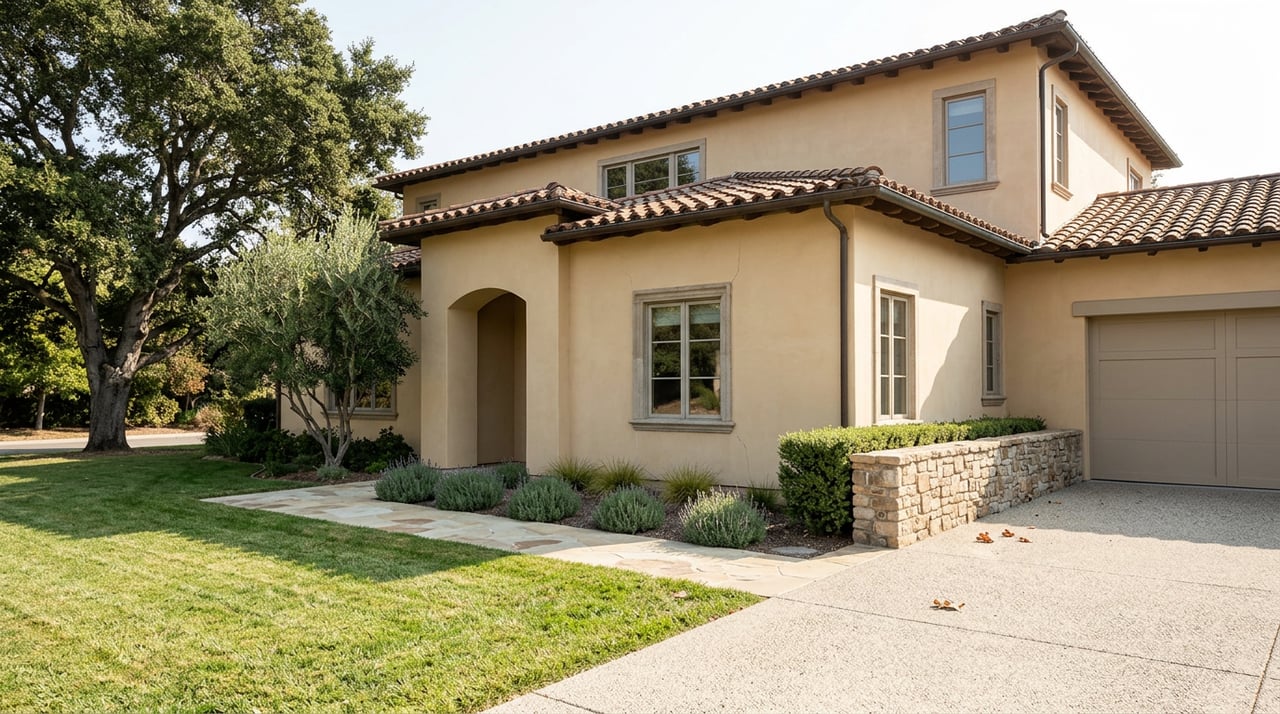
Septic Systems in Alamo: What Buyers Should Check Before Closing
A buyer touring a four-acre lot on the Westside stops at the laundry room door and asks the obvious question: is this on city sewer? The seller's agent says something like "we believe so" and moves the tour along. In Alamo, the answer may lead buyers to investigate the system and any work they hope to do on the property.
Understanding the process can help buyers identify potential septic-system issues early and evaluate any proposed repair credit.
Alamo has never been a fully sewered community in the way Danville's newer tracts are. It is unincorporated Contra Costa County, built out with large parcels, oak canopies, and a deliberately rural feel that includes an absence of sidewalks and streetlights in many pockets. Properties in Westside Alamo and the Stonegate community, where lots commonly run from a half acre to several acres, are the parts of town most likely to still run on a septic tank rather than a municipal sewer line. Wells are rarer but they exist too, mostly on the larger, older parcels where a home predates the neighborhood's later infrastructure.
The reason traces back to the plumbing history of the whole region. Central Contra Costa Sanitary District, known locally as Central San, was formed in 1946 specifically because the postwar building boom had overwhelmed a rural area's septic capacity, made worse by the area's heavy adobe clay soil that drains poorly and stresses drain fields. Central San's service area now covers Alamo along with Danville, Lafayette, Moraga, Orinda, Pleasant Hill, Walnut Creek, and parts of Martinez and San Ramon, but coverage was never universal. Homes built before a sewer main reached a given road, or set too far from one to justify the connection cost, simply stayed on septic. Many still are.
Central San actually runs a low-cost financing program called Septic to Sewer, or S2S, aimed at homeowners with private septic systems near an existing sewer main who want to convert. The program lists Alamo among the areas eligible for conversion.
Here is the part that catches buyers off guard. Some California counties have built a formal checkpoint into every septic sale. Santa Cruz County, for example, requires a point-of-sale inspection and disclosure document for any parcel served by an onsite wastewater treatment system, with a pumping and inspection report that has to be current within a set window before the deal closes. If the county's process finds problems, repairs generally have to happen, or the responsibility has to be formally transferred to the buyer in writing, before the county will let the transfer proceed.
Contra Costa County has no equivalent point-of-sale ordinance for septic systems. The county's Environmental Health division, through its Land Use Program, regulates the permitting, siting, and construction of septic systems and wells year-round. It sets technical standards, like the required 100-foot separation between a well and a septic system's leach field, and it handles the site evaluation and percolation testing anyone needs before installing or altering a system.
If a buyer wants proof the system will hold up, they can negotiate for a septic inspection and pump-out during the contingency period.
This distinction has always existed, but it mattered less when Alamo was in a seller's market. A buyer competing against five other offers in 2021 had little room to insist on a fresh septic inspection or push back on a vague disclosure. Ask too much and the next buyer in line would waive the request and win the house.
That leverage has shifted. Alamo's median sale price came in at $2.27 million in May 2026, down from $2.7 million the month before and down 19.2 percent from May 2025's $2.81 million. Homes are also taking longer to sell, with average days on market roughly doubling within that same one-month window, from 44 days to 81. Sellers are still getting close to their asking price in aggregate, with a sale-to-list ratio around 102 percent, but the combination of softer prices and slower sales means buyers have more room to ask hard questions before removing contingencies.
A slower market is exactly when a vague answer about a septic system stops being something a buyer waves through. Because the county does not conduct a point-of-sale inspection and the seller may not know the system's condition, buyers can use their contingency period to investigate it.
The county's setback requirements do more than protect drinking water. They can quietly limit what a buyer can build after closing. Contra Costa's Land Use Program requires a minimum 100-foot separation between a well and a septic system's disposal field, and any new construction, remodel, or accessory dwelling unit on a septic-served property has to go through a building plan review that checks the proposed structure against those same setbacks.
On a typical half-acre Alamo lot, a driveway, an existing leach field, a well, and a proposed ADU pad can eat through 100 feet of separation distance faster than a buyer expects. Anyone planning an ADU on a septic or well property in Alamo should confirm the system's mapped location with a soil evaluation before assuming a specific building footprint will clear county review, not after.
Buyers looking at any Alamo property with septic or well service can protect themselves with a short list of questions answered before the contingency period runs out.
Sellers benefit from getting ahead of the same list. A pump-out and inspection completed before listing, with the paperwork in hand, turns an unknown into a documented fact and removes one of the more common reasons an Alamo escrow stalls in today's slower market.
How can I evaluate a septic system before buying in Alamo? Ask about the system's history and consider having your own inspector evaluate it during the contingency period, especially if the seller's information is vague or incomplete.
How do I find out if a specific Alamo property is on septic or sewer? Start with the seller's Transfer Disclosure Statement, then confirm independently. Contra Costa Health's Land Use Program maintains permit records for septic systems and wells and can be reached directly for a parcel-specific check.
Can I convert an old septic system to sewer if my property is near a Central San main? Often yes. Central San's Septic to Sewer program offers low-cost financing for homeowners with private septic systems located near an existing sewer main, and it specifically lists Alamo among its eligible service areas.
Does a septic system affect what I can build later? It can. The county requires a 100-foot separation between wells and septic disposal fields, and any new structure or ADU on a septic-served lot goes through a building plan review against that setback before a permit is issued.
If you are weighing a purchase or a sale on a septic or well-served Alamo lot, the details above are exactly the kind of thing worth sorting out before you are three weeks into escrow. Serean Kimmel works Alamo's larger parcels regularly and can walk you through what a specific property's system means for your timeline and your offer. Get Your Free Home Valuation and start that conversation with the facts already on the table.
This article is general information, not legal, tax or financial advice. Consult a qualified professional about your situation.




Get assistance in determining current property value, crafting a competitive offer, writing and negotiating a contract, and much more. Contact me today.
Learn More

Serean Kimmel | CA DRE# 01770629
3329 Castro Valley Blvd Castro Valley CA 94546